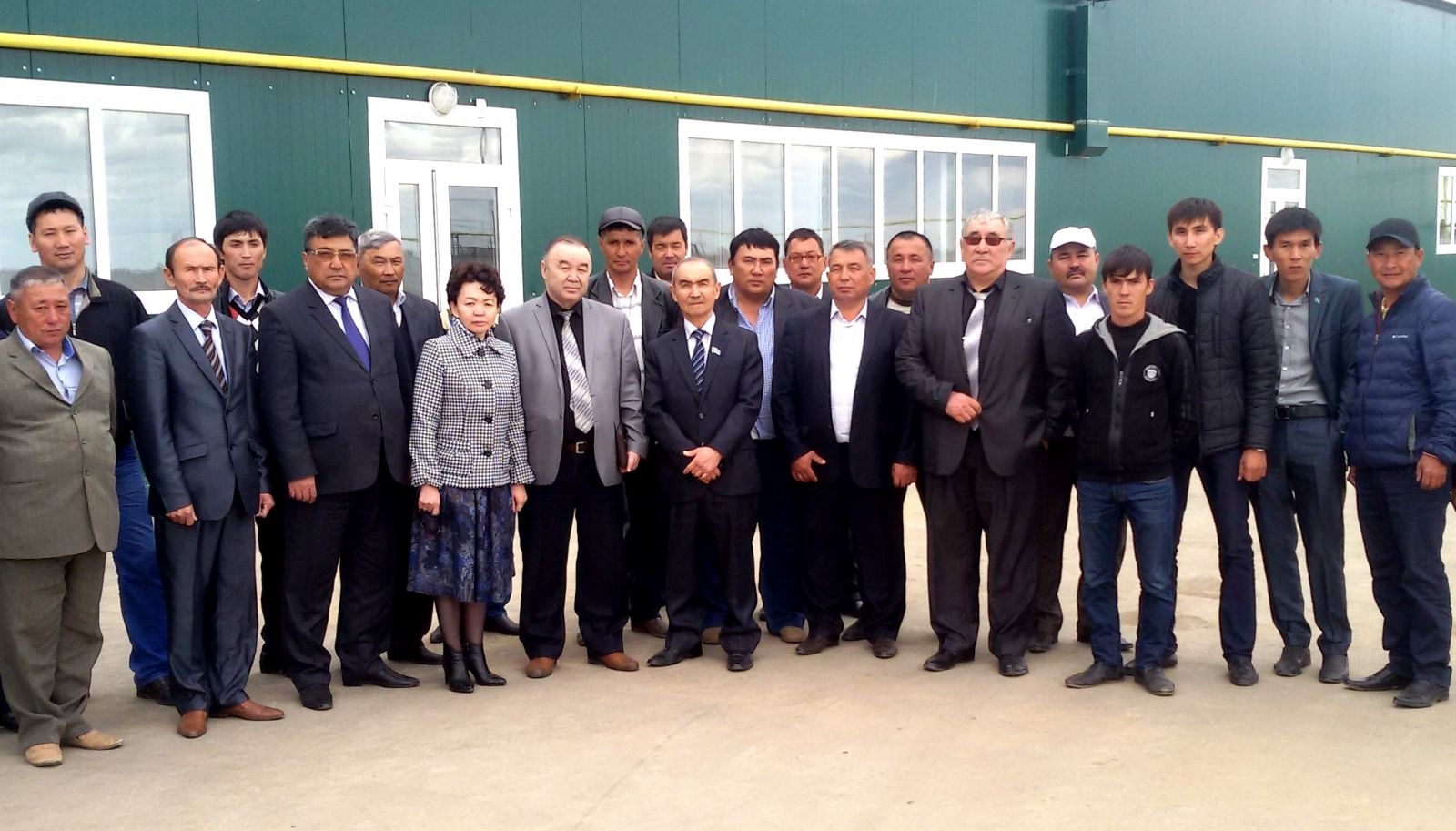
In the Akzhaik district of the West Kazakhstan Region, the regional branch of the Chamber of Entrepreneurs, together with the district akimat, organized a visit for heads of local farming enterprises to LLP Batys Marka Lamb. The visit aimed to familiarize livestock breeders with the largest lamb-processing enterprise in Kazakhstan. The small enterprise, together with KazAgroFinance JSC, launched a meat-processing complex producing chilled lamb in vacuum packaging with an annual capacity of up to five thousand tons. The cost of this first-of-its-kind project in Kazakhstan, which meets global standards in technology, processing depth, and product quality, amounted to 2.8 billion tenge, including 1.6 billion tenge for equipment. Financing was provided through KazAgroFinance JSC. “Production includes 12 sections, from slaughter to deboning and packaging. Each section has its own specifics,” said Bakhytzhan Keskenbayev, Director of LLP Batys Marka Lamb. According to the director, the plant has a capacity of 1,400 head per shift and can produce up to 5,000 tons of meat per year. The rate at which the enterprise reaches full design capacity will depend on market conditions. It is planned that animals aged 3 to 12 months will be processed. Tender, young lamb—never frozen, properly chilled—has the highest consumer demand. Product quality is monitored by the plant’s veterinary laboratory. The plant will also perform primary processing of skins and intestines. Bones will be sent for further processing to the meat-and-bone meal facility in the village of Yanaikino. The management of the new meat-processing complex is interested in cooperation with sheep-breeding farms and is confident that raw material shortages will not pose a threat. “The plant is ideally located near raw material sources. Akzhaik district and the neighboring Kaztalovsk, Zhangalinsk, Zhanibek, and Bokeyorda districts are all livestock-oriented. In addition, farmers from Aktobe, Atyrau, and Kyzylorda regions are already ready to cooperate,” said the director of the complex. Akzhaik district akim Nariman Toregaliyev noted that livestock farmers are shifting their focus toward sheep breeding: “Today there are 220,000 sheep in the district, and I believe this number will only grow with the launch of the plant.” According to Aigul Abulkairova, Deputy Director for Social Affairs of the WKR Chamber of Entrepreneurs, the implementation of this project contributes to meeting several key objectives set by the Head of State. First and foremost is the creation of new jobs. Currently, 120 people are employed at the enterprise, and once full capacity is reached, an additional 285 jobs will be created. “Production of this level,” Abulkairova said, addressing Bakhytzhan Kuspayev, Director of the Akzhaik Agrarian and Technical College, “requires highly qualified personnel. You will need close cooperation with the enterprise to implement dual training.” “Second,” she continued, “is the development of export potential. It is planned that more than 70% of the plant’s production will be exported—to Russia and several European countries. Importantly, domestic producers are entering the global market not with raw materials, but with finished products.”
Development of a comprehensive automation solution is the creation of a unified, integrated control system that combines software and hardware to automate all key business and production processes of an enterprise. Such a system provides centralized management, resource optimization, increased productivity and product quality, as well as reduced costs and workforce requirements.
Development of a comprehensive automation solution
Centralized control of processes across the entire production facility
Manufacture and installation of control panels, including power and control sections
Staff training and subsequent system maintenance