Zarechenskaya Secondary General Education School,
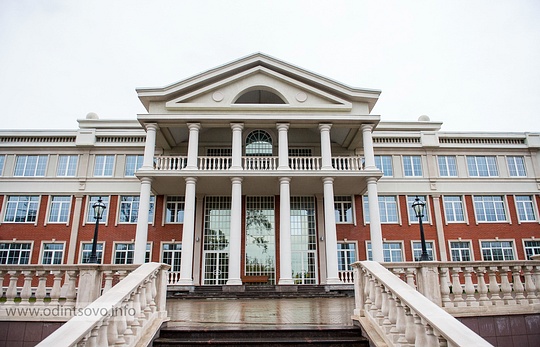
since January 1, 2012 an autonomous general education institution, is located in the urban settlement of Zarechye, Odintsovo Municipal District of the Moscow Region.
The educational process is built on the classical traditions of Russian education combined with the best achievements of international pedagogy. The main goal of the teaching staff is to teach children how to think.
In the first stage of education (grades 1–4), teaching is carried out in accordance with the new second-generation educational standards, with a wide range of extracurricular activities.
Students begin learning a foreign language in the second grade. Starting from the sixth grade, a second foreign language is introduced (in classes with an extended curriculum).
In the basic school (grade 9), pre-profile training is provided, along with elective courses chosen by the students. This enables them to successfully determine their educational track at the senior level (grades 10–11).
School Mission: to educate and raise a citizen of the country who is integrated into the global economic, political, and cultural environment. We aim to nurture individuals who are:
• capable of effectively mastering new information and advanced technologies;
• ready for lifelong education;
• grounded in universal moral and cultural values;
• capable of successfully adapting to a constantly changing world;
• competitive.
Key Features of the Educational Process:
• the use of activity-based teaching technologies: project work, development of critical thinking;
• health preservation and strengthening of students’ well-being;
• elective courses chosen by students;
• pre-profile training;
• profile-oriented education;
• introduction of the additional course “Fundamentals of Moral Education”;
• the school serves as an experimental platform and works on the topic “Health-preserving educational technologies as a guarantee of student success.”
Main Directions of School Development:
• developing a program to improve the quality of education through the introduction of new pedagogical technologies;
• extensive use of information technologies and ICT tools in the educational process;
• expanding student participation in school governance;
• expanding public participation in school management;
• improving the system of supplementary education;
• working within a unified school information environment;
• expanding the range of additional paid educational services based on parent requests;
• ensuring safe conditions for students during the reconstruction of the school building.
Development of a comprehensive automation solution is the creation of a unified, integrated control system that combines software and hardware to automate all key business and production processes of an enterprise. Such a system provides centralized management, resource optimization, increased productivity and product quality, as well as reduced costs and workforce requirements.
Development of a comprehensive automation solution
Centralized control of processes across the entire production facility
Manufacture and installation of control panels, including power and control sections
Staff training and subsequent system maintenance